Today's question

What music do you like? Folk songs, classical, Schlager, jazz. The answer shapes the first music.

The Tante Anne Gazette

Price

Open

First pilot mainly free. Paid continuation after the home has seen the value.

No. 1 · Austria · October 2026 A paper for care homes that want residents to stay involved Working model · No clinical claims

Care homes · Austria

Residents keep using their abilities

A small team offers care homes one managed service: an assigned tablet for every participating resident, personal music as the first activity, and a station tablet that keeps every device ready.
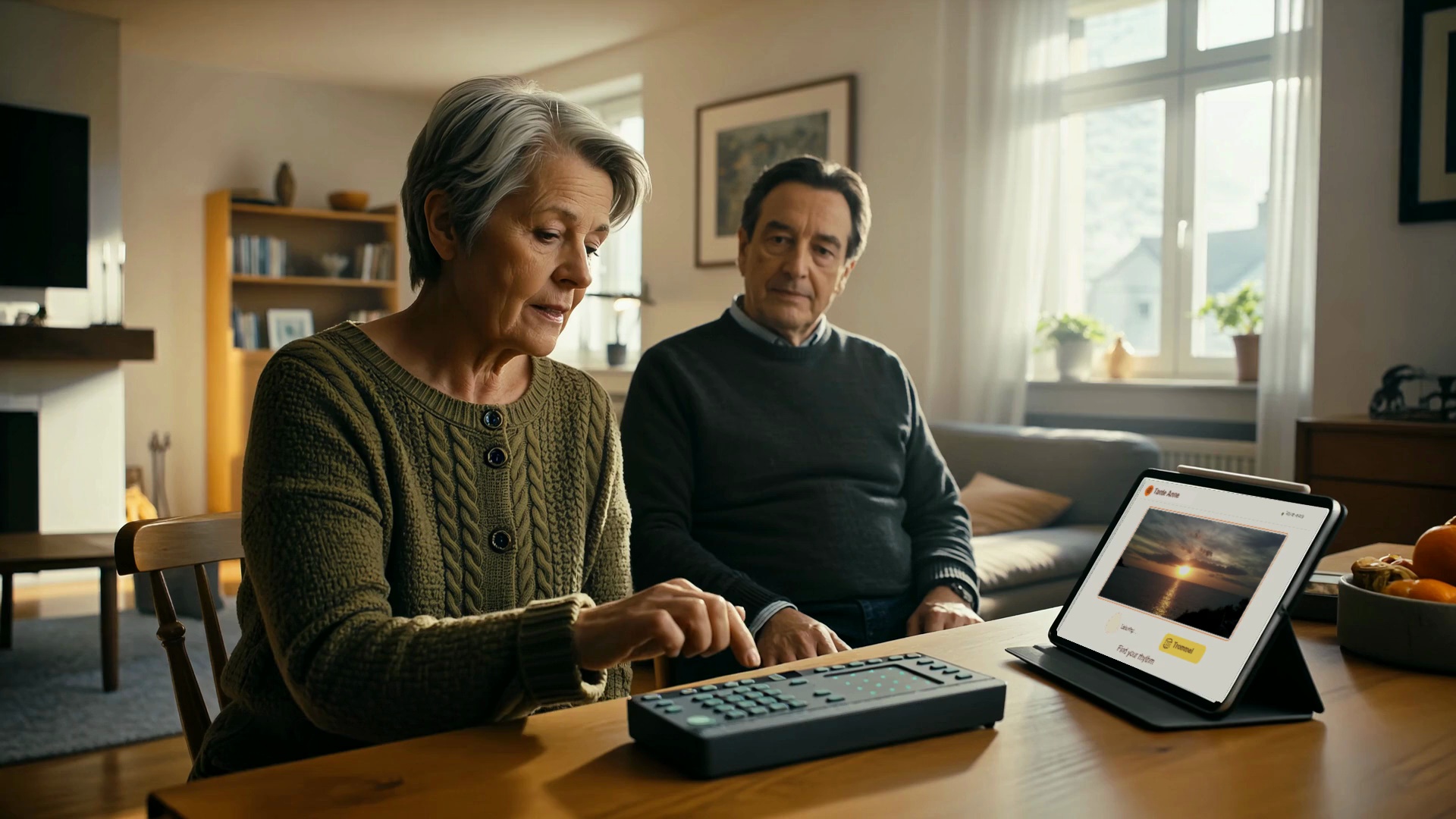
An older woman presses a key on a music controller at a wooden table while a man beside her watches; a tablet shows the Tante Anne screen
A resident shapes her first music while a relative looks on. Still from the concept film. The controller shown is not part of the offer; the tablet is.

Four people are offering care homes a managed service that gives each participating resident an assigned tablet with personal music as the first activity. Caregivers keep every device ready from one tablet at the care station.

The service starts with three questions: the resident's name, the music they like and what they enjoy doing. The team sets a five-minute target for this first conversation, with a caregiver or a relative sitting beside the resident. A complete life story is not required before first use, and nothing is presented as a memory the resident has not shared.

The answers shape the first music. Residents listen, choose and shape it through simple controls and do not need musical training. Over the following days the personal context grows through use. Relatives can add to it if they want to; nothing depends on them.

The home buys one managed package per station: tablets with simple mounting, a station control tablet, software, a SIM in every device, device management and support. The first pilot is mainly free. Paid continuation follows once the home has seen the value. The price, as the masthead says, is open.

The team expects residents to keep using their abilities and remain involved in everyday life, and calls this an expectation rather than a finding. In a pilot it will measure participation, mental stimulation, wellbeing and total caregiver effort. It does not claim to treat dementia or to replace staff. See the editorial below.

How it starts

Three questions, then music

  • What is your name?
  • What music do you like?
  • What do you enjoy doing?

Those are the questions. Five minutes is the target. Photos can be added if they are at hand, and no family preparation is required. The first music follows the answers. The personal context grows with daily use, and caregivers or relatives can add to it when they like.

The care station

One tablet keeps every device ready

Caregivers assign devices, start activities and see device status from one station tablet. The resident's tablet stays mounted and charged in one place in the room. No searching for equipment, no second charger, no interface to explain.

The team calls this less device and app friction. It will count caregiver minutes in the pilot before it calls anything a saving.

The home

One service, one monthly fee

Hardware, connectivity, software and support arrive as one kit per station, managed by Tante Anne. The home does not run a Wi-Fi project and does not own a drawer of chargers.

Capacity packages come in S, M and L, sized by participating residents, with bands tested in the first homes. The full list is under Notices.

Notices

Tablet with simple mountingOne per resident. Affordable, cellular, assigned to one resident, mounted and charged in one place.
Station control tabletOne per station. Assign devices, start activities, see device status.
Software and SIMResident experience, staff controls, device management. Independent of the home's Wi-Fi.
Management and supportProvisioning, updates, replacement and support. On site for the first homes, remote later.
Monthly managed bundleOne fee per station for devices, mounting, software, device management and connectivity.
Minimum term 12 monthsBilled monthly. Monthly billing does not mean monthly cancellation.
Capacity packages S / M / LSized by participating residents with assigned devices. Bands tested with the first homes.
PriceOpen. First pilot mainly free. Paid continuation after the home has seen the value. Partner service terms remain open.

Editorial

What we do not claim

Tante Anne does not treat dementia, slow its progression or replace human contact, staffing or professional care. It gives residents an accessible personal activity and gives caregivers a ready device with simple controls. It sits beside existing care and activity work, not in place of it.

Time savings become a promise only after they have been measured in a home. Until then, every benefit on this page is an expectation. We would rather print expected than print a number we cannot stand behind.

Evidence

What the pilot will measure

  • Participation. Weekly residents with a meaningful, voluntary choice, expression or contribution enabled by Tante Anne, confirmed by the resident or a caregiver observation.
  • Mental stimulation. Opportunities to use attention, memory and creative expression through active music.
  • Wellbeing. Musical enjoyment and emotional wellbeing, reported by residents and observed by staff.
  • Total caregiver effort. Device search, charger handling, steps to start, help needed and total caregiver minutes, against ordinary practice.
The four team members in front of a mountain lake, each holding a laptop
The editors, Austria.

The editors

Four people, one station at a time

  • Julia Isabelle Gerber
  • Denis Schüle
  • Sebastian Schlosser
  • Moisés Valenzuela

We listen. We learn. Together, we make music more accessible. The first homes get us on site; remote support follows once the process is repeatable.

Coupon

Request a demonstration

We demonstrate Tante Anne on site and discuss a first pilot with your care team. Tell us about your home and we will get in touch.